WeSplurge.com

Fluorescent Red HTPLA

Fluorescent Red HTPLA

Regular price $5.00 USD
Regular price Sale price $5.00 USD
Sale Sold out
Shipping calculated at checkout.
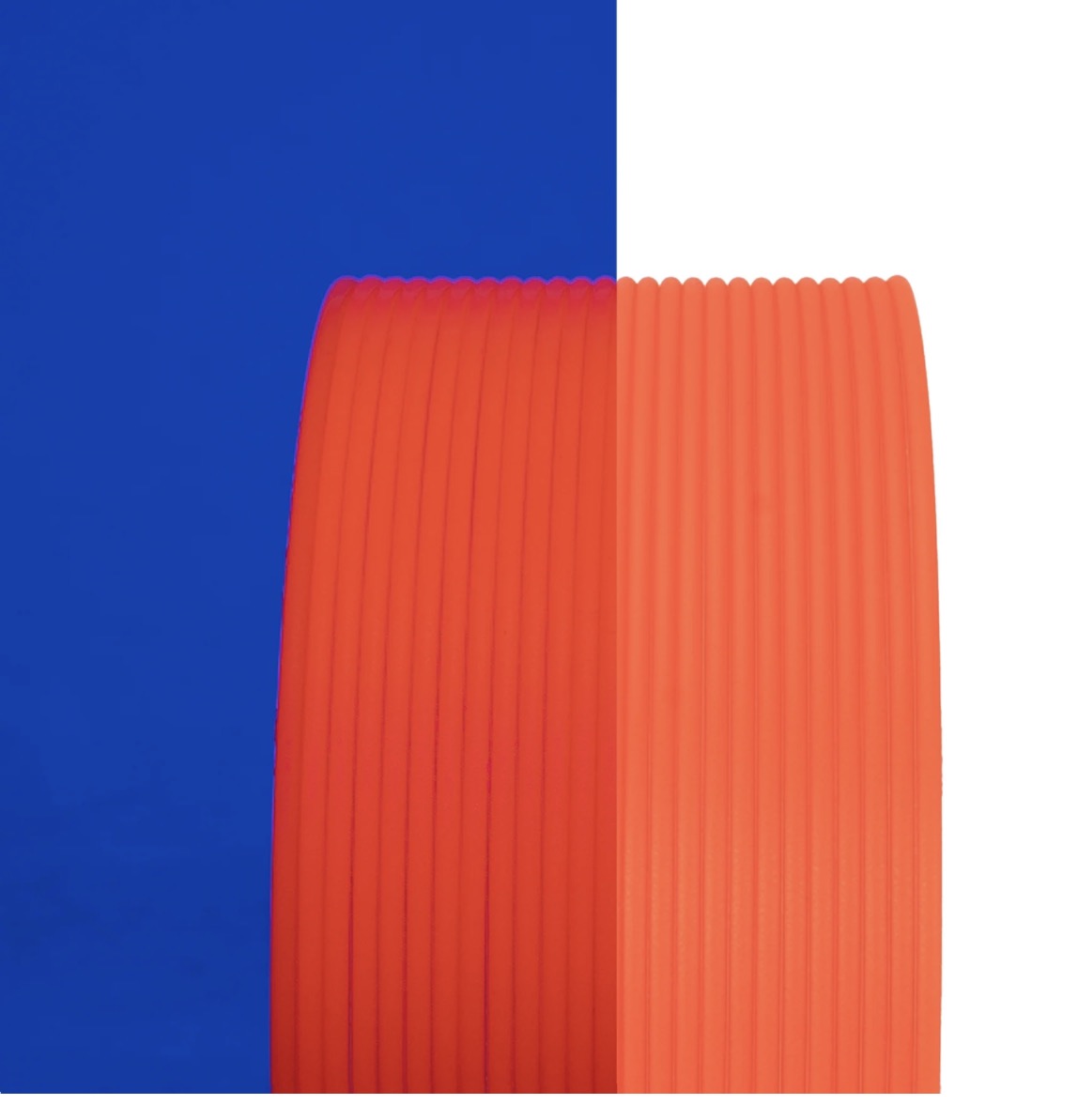
  • Color Shift!

    • Bold, opaque red in daylight.
    • Bright glow at night w/ blacklight.
    • Dark photos lit w/ optimal 365 nm UV.


Nozzle Temperature 220-240C

Heated Bed Temperature 55-65C

Print Speed 100-150mm/s Flow Rate/Extrusion Multiplier 100% Extrusion Width .45mm (.05mm larger than nozzle size)

Volume Flow Rate 10-12mm³/s We do not recommend drying our PLA-based materials. If you notice evidence of moisture (surface defects, popping sounds, under-extrusion, etc.), these can be addressed in the settings by increasing the speed and/or decreasing the temperature.

HTPLA is a semi-crystalline grade of PLA optimized for heat-treating for higher temperature use. Prior to printing, HTPLA parts should be scaled in the slicer to compensate for shrinkage when heat treating. (Please note that all values for heat-treating are process dependent and may vary between users)

Print with the ease of standard PLA with standard hardware and temperatures, but make fun, mesmerizing prints that stand out. Celebrate good times by printing ornaments, toys, and treasures. If you want to make a print more fun, just add glitter. Glitter Flake has little risk of clogging or wearing your nozzle, and it won't make a glitter mess, but beware, printing with glitter is sure to be addictive! Glitter particles are relatively small but have some orientation effects, giving top/bottom surfaces more shine than sidewall, so have some fun playing with orientation to see how the result changes!

Like our other HTPLAs, Glitter Flake HTPLA can be "Heat Treated" to increase crystallinity for "Higher Temperature" resistance compared to amorphous PLA, ABS, and co-polyesters like PETG! Glitter Flake HTPLA prints translucence, but turns opaque when heat treated (or crystallized). With a more crystalline structure, heat treated HTPLA parts can hold form to near melting, though temperatures where the material is practically useful vary greatly depending on geometry and load conditions!

For this improved the performance, your prints should be baked in an oven until you see a change from translucent to opaque with reduced gloss. This visual change indicating the improved performance! We've seen the change take place in 5-10 minutes on thin walled parts but can take an hour or more. We've had good luck in a quality, at home convection oven at 110C (225F). Parts will get very "floppy" before becoming more firm, so please leave supports on your parts or support them and bake them on a flat, non-radiating surface (like glass, ceramic, or composite).


View full details